Best Resident Doctor of the Year
Recent Awards from the Nigerian Medical Association in Edo State included Best Urban Medical Practice, Best Rural Medical Practice, Best Medical Journalist, Best Medical Institution and Best House Officer of the Year. Sister Ekaete Ekop received the Professor Eugene Okpere Award of Excellence for Best Resident Doctor of the Year. With more than 300 resident doctors at the University of Benin Teaching Hospital alone, this is no small achievement! Ekaete is pictured here receiving congratulations from the Edo State Governor, Adams Aliyu Oshiomole. The Professor of Obstetrics and Gynaecology spoke of her dedication to patients - ‘the best we’ve had in 35 years since the department was started.’ Sister Ekaete who is studying to become a Consultant Obstetrician and Gynaecologist says the residency is the toughest thing she has done in life but it is very rewarding. ‘Obstetrics is about decision making – there are no templates. Each woman is unique and sometimes the difference between life and death of the mother and/or fetus is a split second decision. This is a dynamic profession and there is no place for dawdling or laziness. There is nothing more rewarding than the birth of new life to a living mother. I am happy that my passion harmonises with the MMM dream of enhancing the lives of mother and child. ‘What keeps me going in this place from one difficult day to another is the hope that the training I’m getting will make a difference in the life of women... It is my fervent hope that rural African women will come to see Safe Motherhood and good health as a right and not as the rare undeserved privilege many of them perceive it to be.’
In Uganda, at Makerere University’s Mulago Teaching Hospital, Sister Magdalene Umoren (right) is also working for her Master’s in Obstetrics & Gynaecology. She was delighted to hear the news of Ekaete’s Award. As young women they studied in the same class at the University of Calabar Medical School. Later they met again in the MMM Novitiate! After religious profession, their paths parted as Ekaete pioneered a new mission in the Republic of Benin and Magdalene headed to Tanzania. Magdalene, too, finds her course intensive. At Mulago they average 70 deliveries per day. Postgraduate doctors also run ante-natal clinics, supervise oncology care in the gynae unit, learn obstetric fistula surgery, teach intern doctors and medical students, prepare tutorials as well as attending their own lectures and preparing research papers with Consultant Moderators.
Peer Group Education for HIV Awareness in Ethiopia
Staff of the HIV Education Department at the MMM Counselling and Social Services Center in Addis Ababa have seen a great increase in basic awareness about HIV among the general public since they began activities in 1992. Part of their Strategic Planning was to focus where knowledge is low, like anti-retroviral treatment, prevention of parent-to-child transmission of the virus, and the importance of being tested for HIV.
Since young people still need basic information about HIV, a decision was made to pass over the responsibility for providing this to members of ‘Anti-AIDS Clubs’ (AACs) with whom the Education Department has worked closely. These are young volunteers and so relate well to the concerns of their peers. Sister Carol Breslin, the doctor in charge of the program tells us: 'This peer-group work is important and provides a multiplier effect, leaving us free to deal with the more specialised areas. ‘Department staff provide technical support and training for the clubs, including the use of puppets to reach young children or discuss sensitive issues in a non-threatening way. Trainees learn how to make puppets and write scripts. It is amazing to see what they can come up with as they gear their productions to the different age groups of their audiences.’ In the past four months, in collaboration with other departments of the MMM Counselling Center and the AACs, the HIV Education Department provided:
- 1st and 2nd round refresher courses on the use of a Youth Action Kit for 23 young people from different AACs and youth forums;
- General knowledge competitions for the general public and in primary schools in two sub-cities of Addis Ababa;
- Promotional sessions with one AAC in which more than 250 persons were tested for HIV over 2 days;
- A 5-day training course for 15 community members and a further 3-day training course for women’s association members and local Council members.
The team has gained a high reputation because of the quality of information and has developed a good relationship with the armed services. They organised a 2-day awareness-raising session for 500 members of the armed forces and 350 staff members at the Grand Palace. Sister Carol says the success is all due to the collaboration of everyone in the Center, the enthusiasm of the young people, and the leadership of Tiringo Fantahun, the Co-ordinator of the Education Department.
Martyr of the Amazon remembered
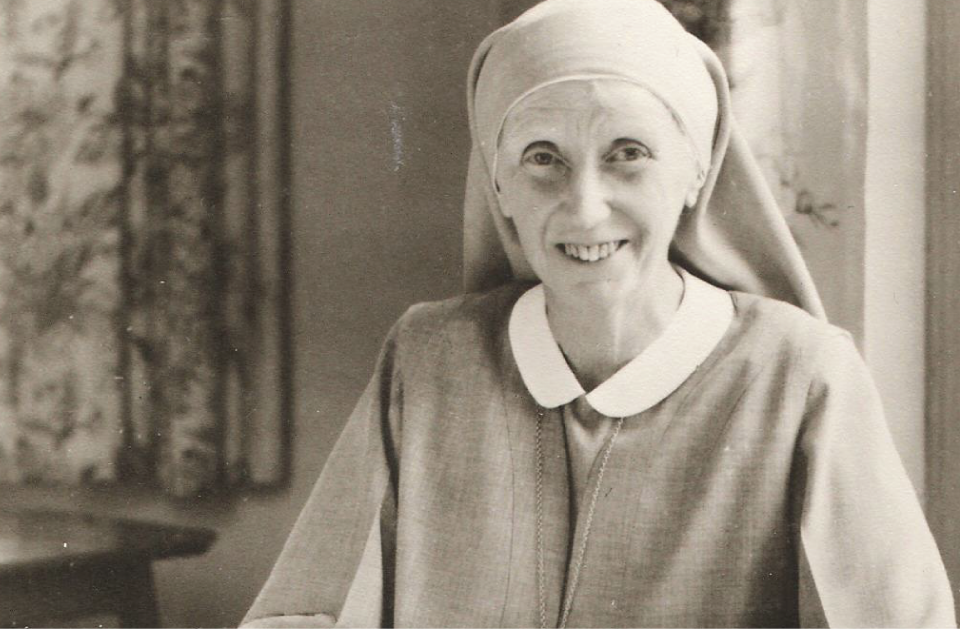
Writing from Brazil, Sister Regina Reinart (right) reminds us that half a decade has passed since Notre Dame sister, Dorothy Stang, was brutally slain. The Ohio-born missionary, aged 73, was murdered on February 12, 2005. She lived and died for the people of the Amazon amongst whom she had worked for more than 20 years. She became a martyr at the hands of greedy landowners who ordered her killing. In the previous two decades in Brazil, more than 1400 activists, small farmers, judges, priests and others had been killed in disputes over preserving land, mostly in the Amazon. Of those killings, fewer than 100 cases have gone to court. About 80 people have been convicted. At the time of Sister Dorothy’s murder, President Lula sent two thousand troops to Pará State to stop the lawlessness. Eventually five men were accused of being responsible for her murder. One got 27 years’ imprisonment, two got 17 years and the other two were never imprisoned even though they were the very ones who ordered and paid for the crime. While their trial is being processed, they remain in complete freedom. Dorothy was murdered because she was blocking these accused and the rich landowners from obtaining yet another parcel of land. She was murdered for her outspoken defence of peasant farm families, who had moved into the rain forest region in a government-sponsored resettlement plan.
As a missionary sister, she formed small Christian communities that prayed and studied the Bible. Putting that message into practice, she established agricultural and rainforest preservation projects. Her initiatives outraged the big landowners who wanted the forest for logging and the land for cattle grazing. Dorothy became a martyr because of her deep passion for the poor and her profound conviction that they must receive their share. The Magnificat - which she would have prayed every single day - says, ‘God raises the poor and lifts up the lowly’. The very moment before her death, she pulled out the bible and read the Beatitudes to her killers: “Blessed are the peacemakers for they shall be called the children of God.” Dorothy is one among many martyrs of the Amazon. She was internationally known but represents hundreds of people who died a violent death yet remain unknown to the general public. She once said: ‘We need to be poor with the poor and re-appropriate a kind and tender relationship with Mother Earth.’
More Hands on Deck!
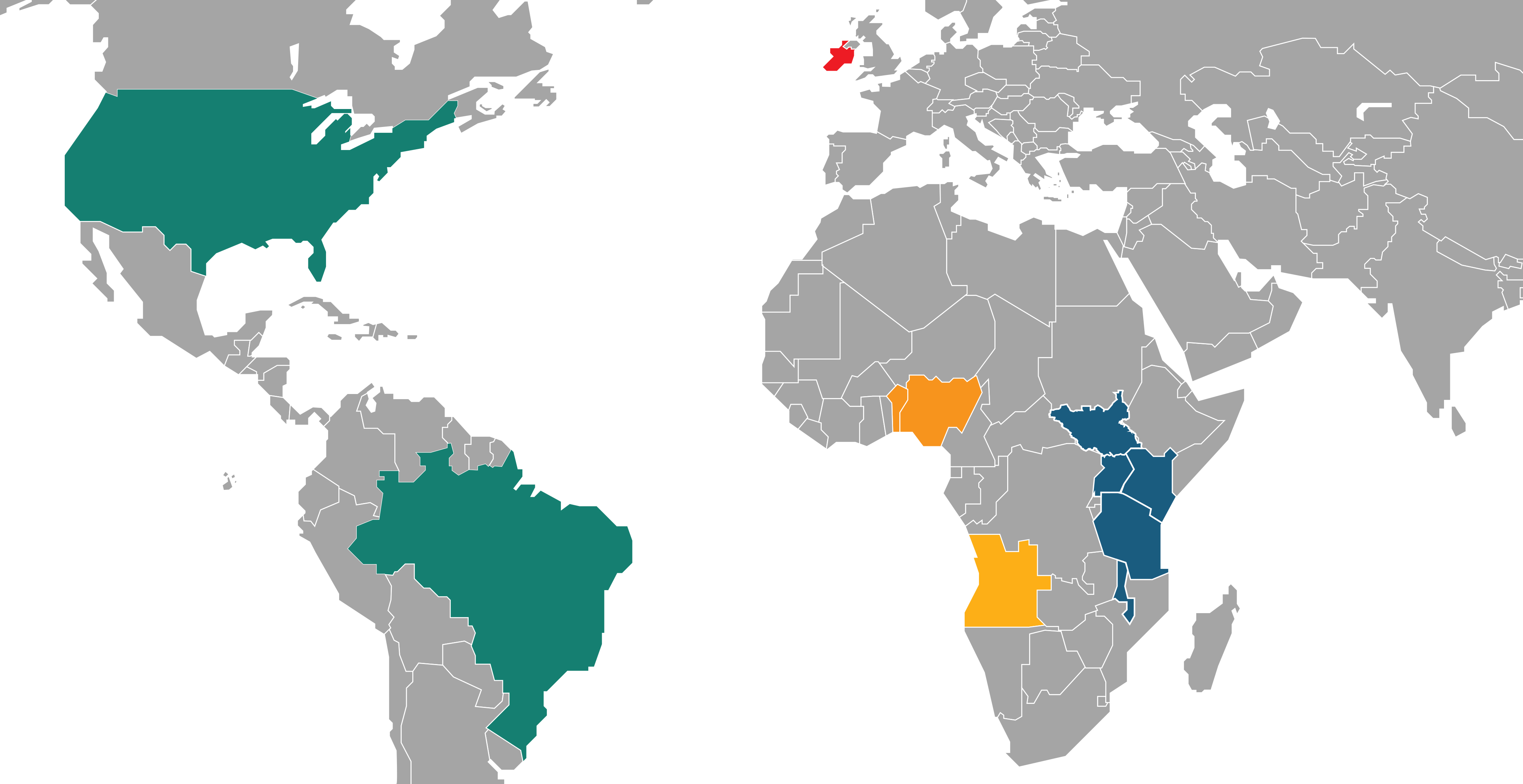
Sister Fidelia Ogujawa was going about her normal duties at the mission we know as ‘Mile 4’ in Nigeria, when the call came to finish up what she was at and re-locate to Ireland! ‘It was shock’, she told us in a recent interview which you can listen to if you click here. Our General Chapter last year put much emphasis on the importance of communications. With 65 communities spread among 14 countries, staying up to date with all the challenges in the mission of health-care and development is no small task. It was obvious that another pair of hands would be needed at the Central Secretariat of our Congregation located in Dublin, which is responsible for internal communications for MMM. That extra pair of hands are Sister Fidelia’s. As a young MMM, she took a degree in Home Sciences and Nutrition at the Nsukka campus of the University of Nigeria, famous for its links with noted author Chinua Achebe.
Her first mission abroad was to Kenya where she spent eight years at Kipsaraman, a highland village looking down into the Great Rift Valley. Kipsaraman was one of the best development projects in which we have ever been involved. The MMMs there, in collaboration with the Kiltegan priests and Kenyan agricultural expert William Kerer, helped the people to terrace the hillsides and produce a good yield despite the hot and dry climate. Sister Fidelia’s knowledge of nutrition helped many mothers to reverse the malnourishment of children referred from the Health Centre. Later Sister Fidelia was assigned to vocation promotion for Kenya. Based in Nairobi, she drove her small jeep all over Kenya, finding her way to distant schools to make the work of MMM known, and visiting the homes of young women who thought of joining us. For the past five years she has been back in her native Nigeria, directing young Sisters in the early years of their vocation as MMMs, as well as helping people with HIV to keep their nutrition right. She knows a lot about vocation. So when the call came to pack her bags once again and head to another country, she simply said ‘I know this is where God wants me now’. The challenge of mastering new technologies feels scary. But Fidelia brings a lot of experience, courage and wisdom to the task. ‘I am willing to learn’, she says. She can be assured there will be people at hand to help her acquire the new skill-set for her latest mission.
If you are in a position to support MMM with a financial contribution, click here for our Online Donation form.
|